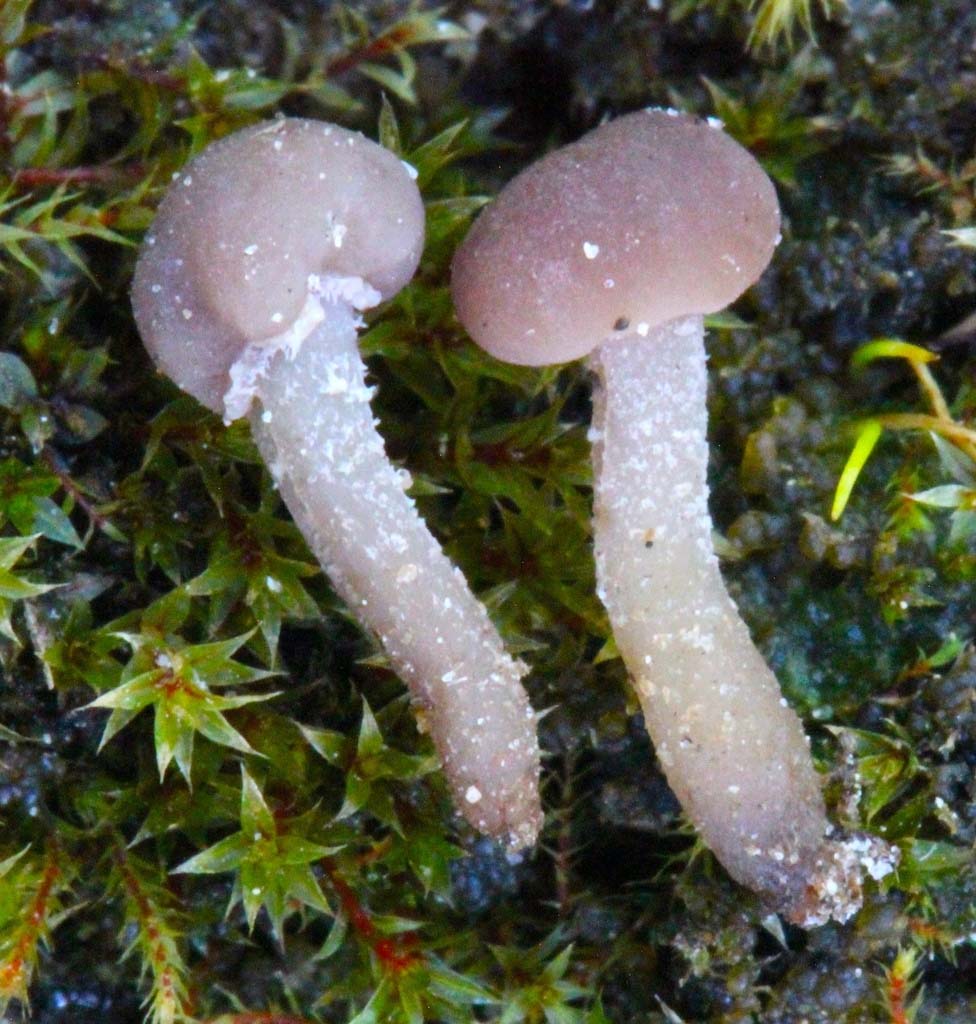
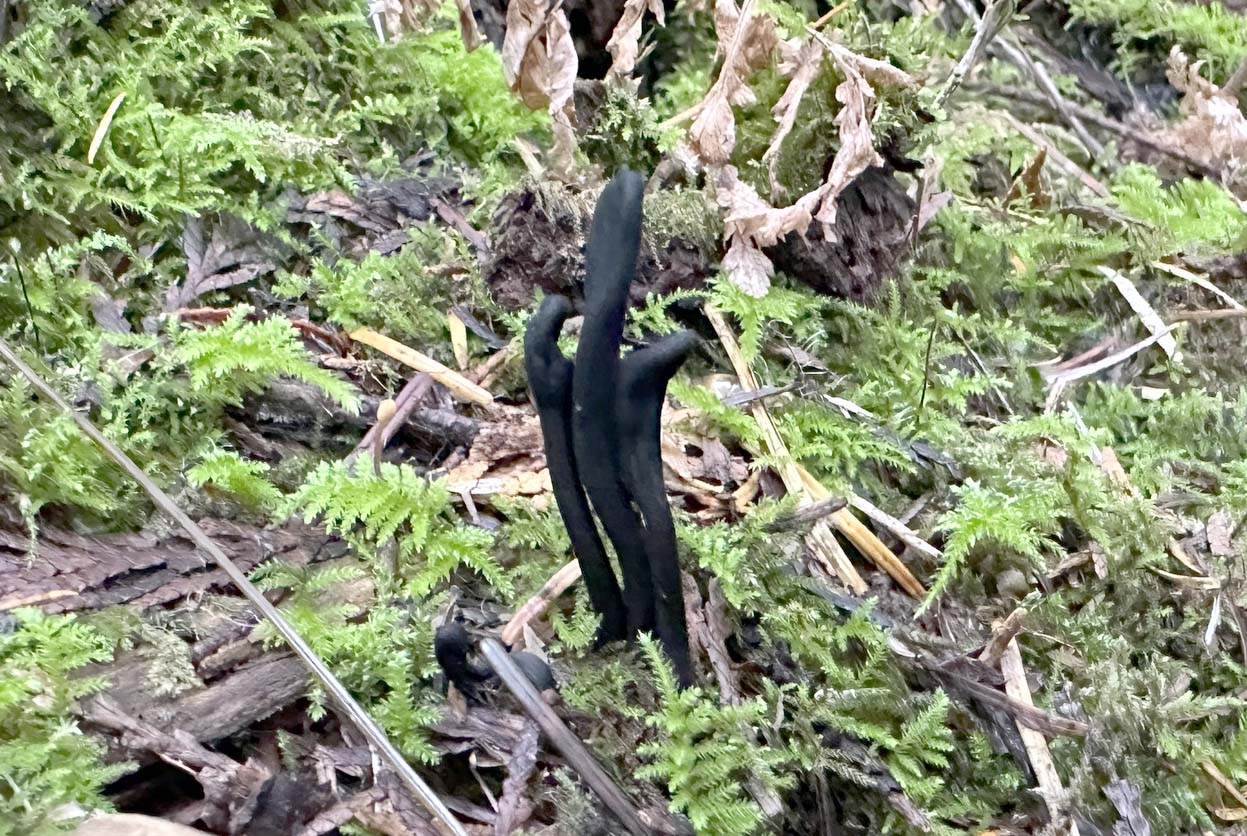
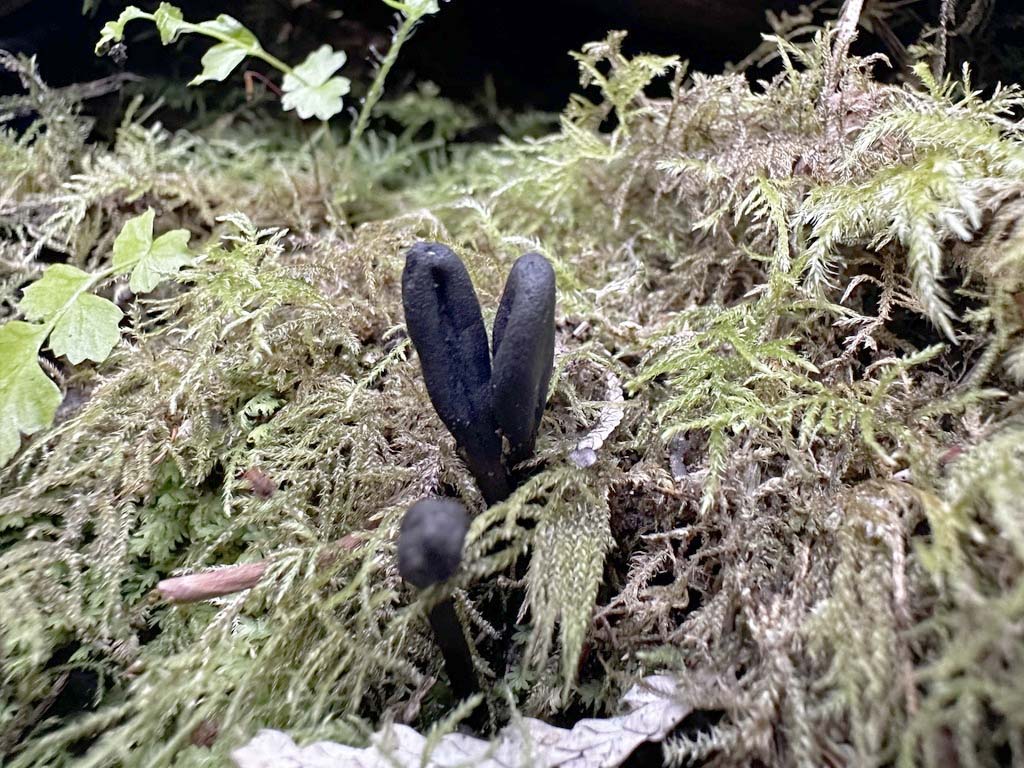
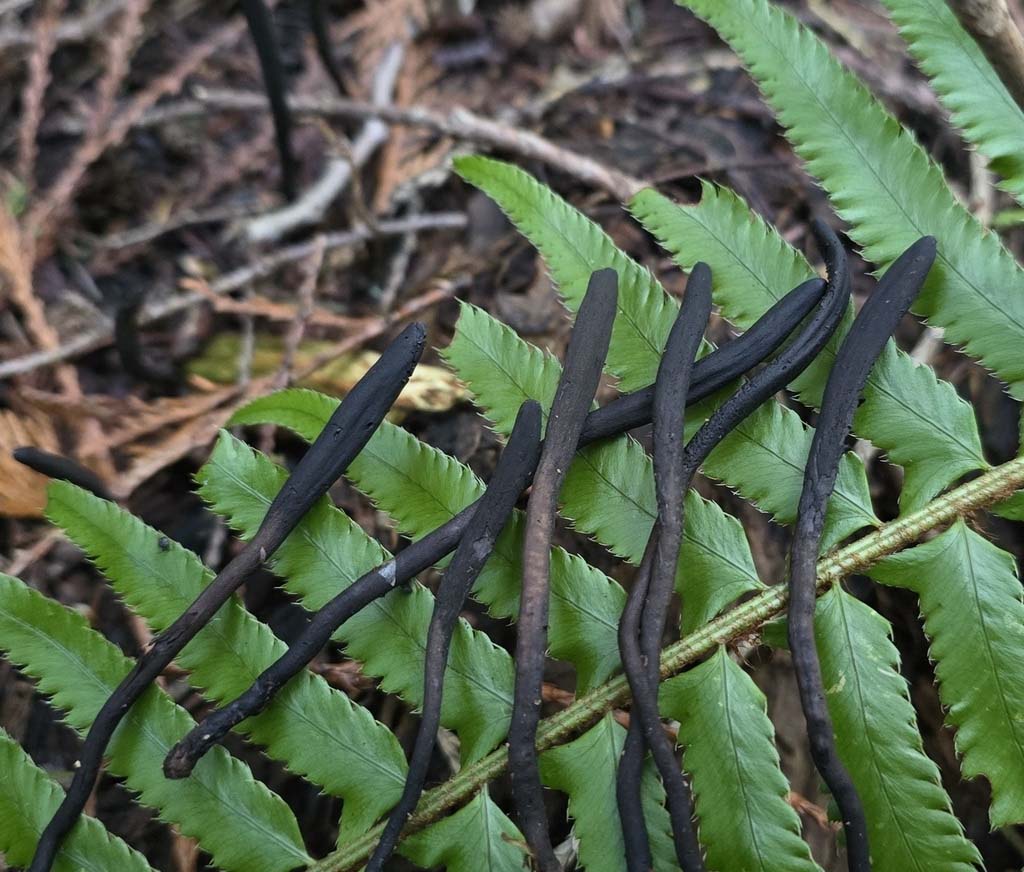
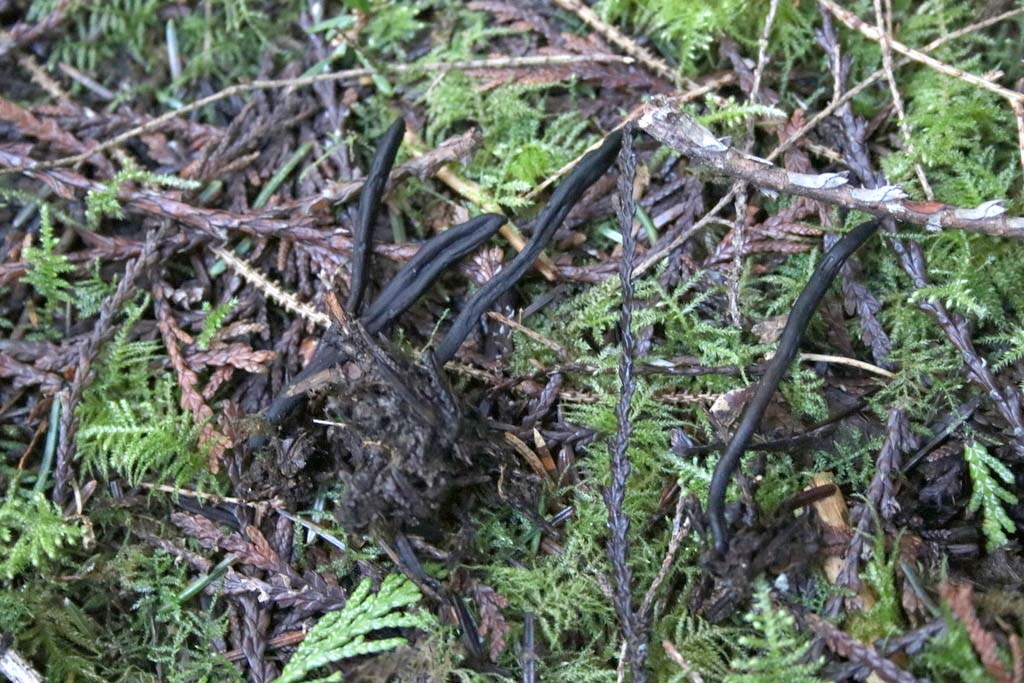
© Steve Trudell
Danny’s DNA Discoveries – Geoglossomycetes of the PNW
by Danny Miller
|
|
Danny’s DNA Discoveries – Geoglossomycetes of the PNW
|
|
Introduction
This class produces dark brown to black earth tongues that are usually spathulate and long stemmed (one genus has a round head). They are most easily confused with Microglossum, but those are a bit more brightly coloured (although one is purplish black) and have colourless spores. abundant common uncommon rare - colour codes match my Pictorial Key and are my opinions and probably reflect my bias of living in W WA. Rare species may be locally common in certain places at certain times. |
|
Geoglossomycetes
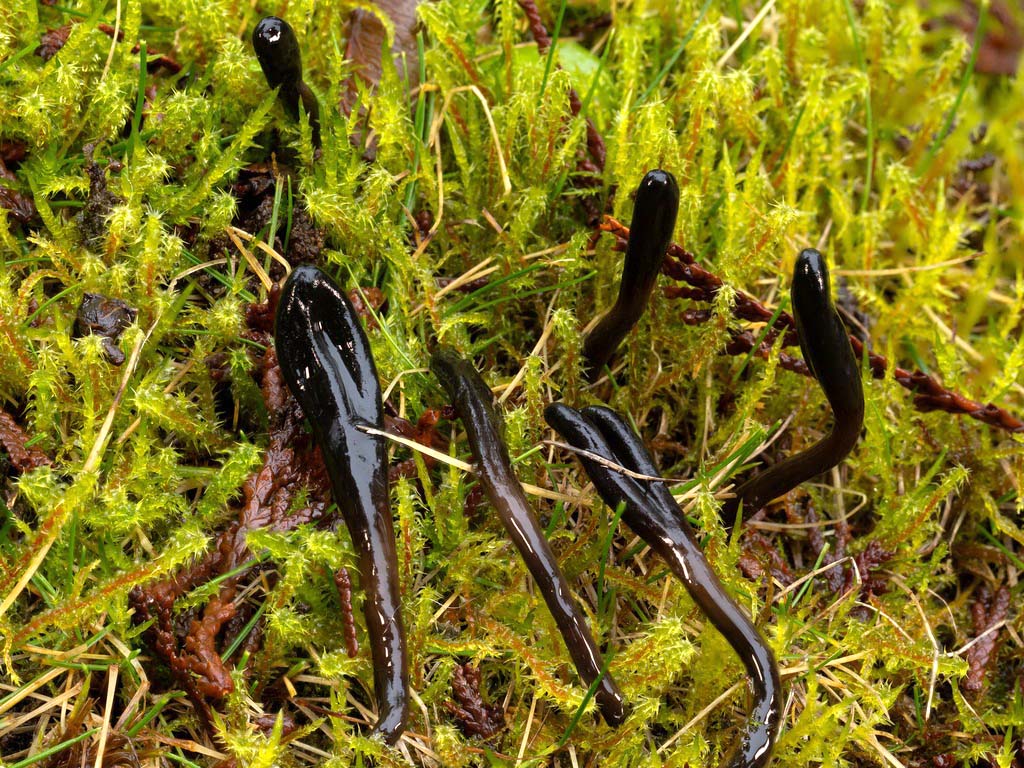
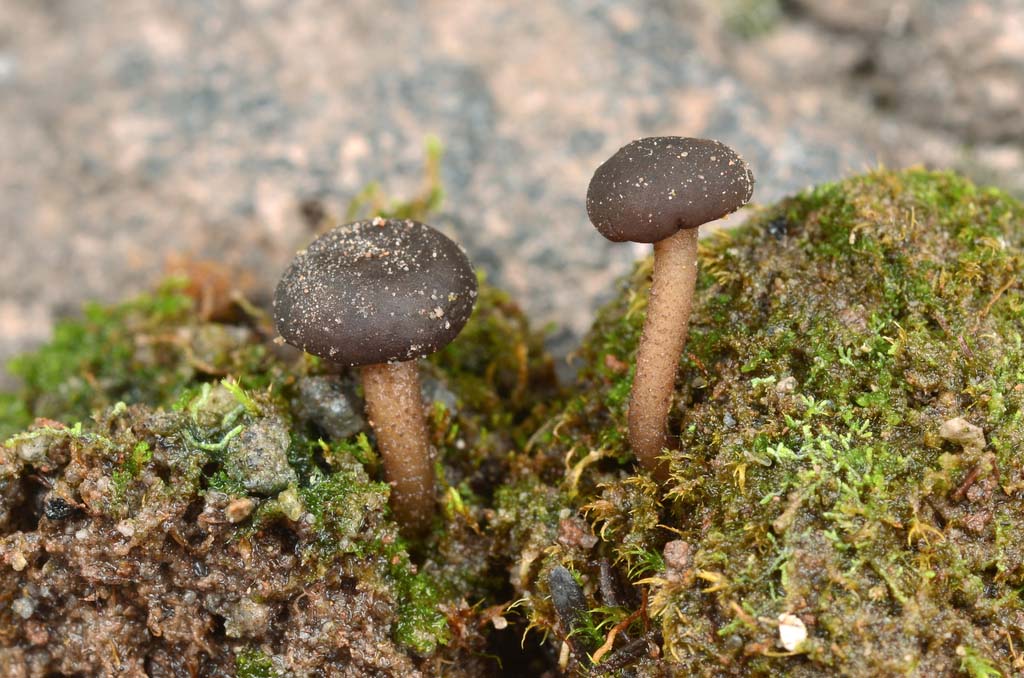
Hairy, viscid, or uniquely shaped Trichoglossum hirsutum EU var. irregulare WA (formerly 'hirsutum-PNW01') - blackish, covered in tiny hairs (unlike Geoglossum). The head may be variably shaped, sometimes elongated, sometimes more round. You may need a hand lens. All PNW sequences so far are our local variety even though the type variety was reported from here too. It appears to be close enough to the type variety to justify only varietal status. Trichoglossum sp. 'MI05' - two ID collections of this lookalike. Trichoglossum velutipes NY - differentiated microscopically. We have no DNA from anywhere, but it was reported from the PNW. Glutinoglossum glutinosum EU - is viscid and almost black. One WA collection matches the epitype sequence fairly well. Glutinoglossum sp. 'CA01' - a lookalike of G. glutinosum discovered through DNA. Glutinoglossum heptaseptatum EU - one ID collection, another lookalike discovered through DNA. Previously only known in the EU and ENA. Sabuloglossum monticola EU - not known from the PNW until it was sequenced from WA. These brownish black earth tongues only have a short stem, with the entire fruitbody being about 1cm tall. Sabuloglossum sp. 'BC01' - still stubby, but not quite as small and seemingly with a more differentiated head. Sarcoleotia sp. 'PNW01' - with a hemispherical dark brown head and paler brown stem. Two OR sequences are 6% different in ITS from EU sequences of Sarcoleotia globosa EU, so our species probably needs a new name. EU sequences vary about 2% from each other, so there might be more than one species in the EU, but even if theirs is all one species ours is likely unique. CA has its own species too. Sarcoleotia sp. 'PNW02' - one collection from OR is a lookalike of PNW01. Sarcoleotia sp. 'ID01' - one ID collection with paler colours.
Trichoglossum sp. 'hirsutum-PNW01' © Warren Cardimona, Glutinoglossum glutinosum © Matthew Koons, Sabuloglossum monticola © Connor Dooley, Sabuloglossum sp. 'BC01' © Alex Reitan
Sarcoleotia sp. 'PNW01' © Connor Dooley, Sarcoleotia sp. 'ID01' © Ed Barge
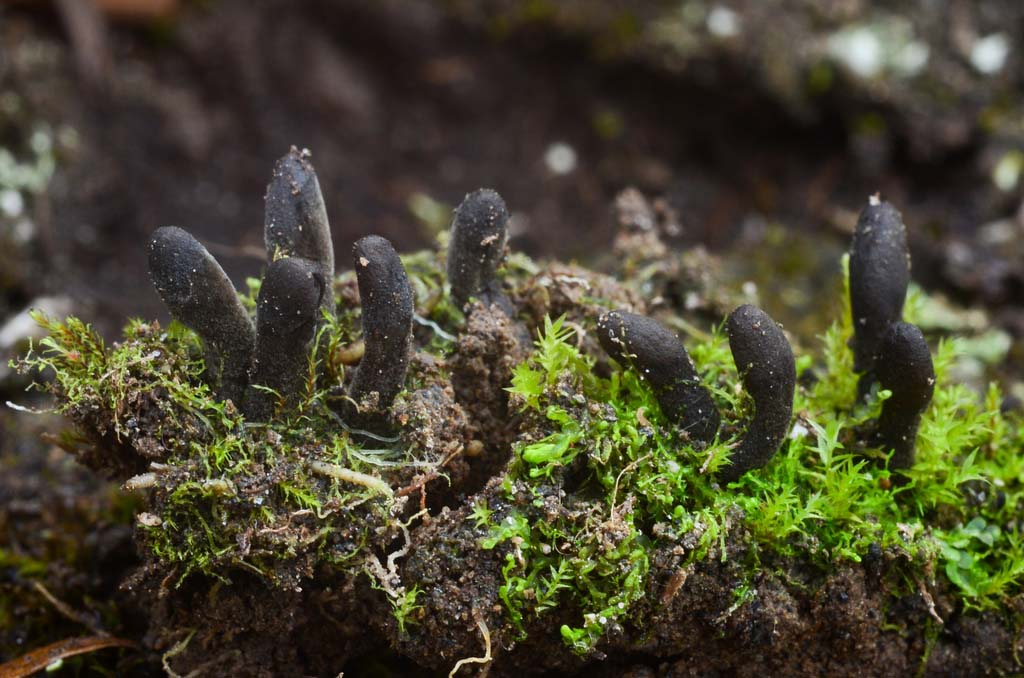
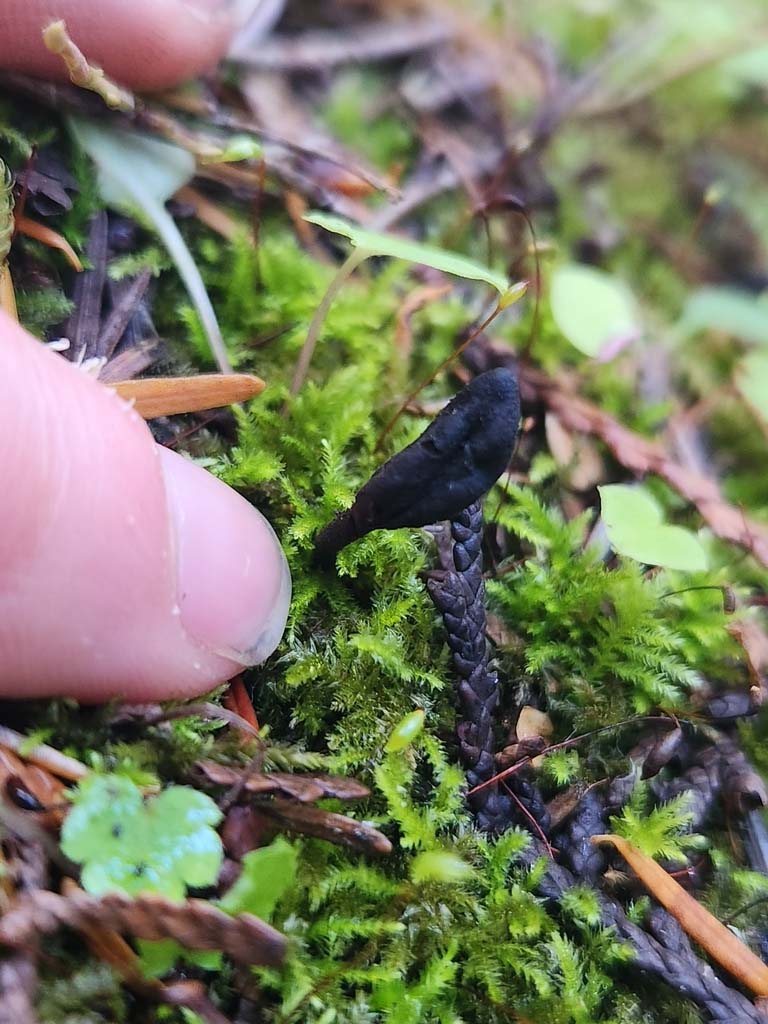
Geoglossum: Neither hairy nor viscid Sometimes brown Geoglossum sp. 'fallax-PNW01' - often (but not always) with brown tones (most others are black or almost black). G. fallax has 2 concepts in the EU, one of which occurs in the PNW. The one sequence I have found from NY, the type area, is 4 bp and 2 ambiguities different from our sequences. It's plausible we have the real thing, but for now I have given it a code. Geoglossum sp. 'PNW06' - also brown and therefore resembling G. fallax (and closely related). I don't know how to tell it apart from PNW01. Always black Geoglossum sp. 'sphagnophilum-PNW02' - black, found in sphagnum moss, although the others can be too. This is a unique sequence that is unverified and should be looked for again. Geoglossum sp. 'sphagnophilum-PNW03' - PNW03 is 4 bp different than an EU sequence that may represent this EU species, and 7 bp different than PNW02. This species was not previously reported from the PNW before they were sequenced, and yet they seem to be the most least uncommon. Geoglossum sp. 'sphagnophilum-OR01' - a short but unique sequence close to G. sphagnophilum and PNW03 that is getting its own code for now. Geoglossum sp. 'glabrum-PNW04' - blackish. Some considered it a synonym of G. sphagnophila, but it appears that it isn't. Our OR and ID sequences are 2% different than an ENA sequence and 2% different than the closest EU type area sequence match, so it appears our species in the complex needs its own name. Geoglossum sp. 'CA04' - one collection was (probably falsely) identified as G. nigritum EU. Geoglossum sp. 'CA05' - one BC collection. Geoglossum sp. 'CA06' - WA and BC collections Geoglossum sp. 'CA07' - two WA collections. Geoglossum sp. 'WA01' - Geoglossum sp. 'PNW07' - Geoglossum sp. 'BC01' - one BC collection so far Geoglossum cf umbratile EU - has been reported from the PNW but no collections match EU sequences yet. Perhaps reports of this represent one of the above species.
Geoglossum sp. 'PNW06' © Matthew Koons, G. sp. 'sphagnophilum-PNW02' © Connor Dooley, G. sp. 'sphagnophilum-PNW03' © Jordan Gates (2 images)
Geoglossum sp. 'sphagnophilum-OR01' © Connor Dooley, G. sp. 'glabrum-PNW04' © Michelle Keller-Pearson, G. sp. 'CA06' © iNaturalist user danieltayrien, C. sp. 'WA01' © Dan Morton
Geoglossum sp. 'CA04' © Kendra Dedinsky, G. sp. 'PNW07' © Autumn Anglin |